CJP NEWSNew Delhi ·
At 11:43 AM on May 15, 2026, Chief Justice of India Surya Kant made a remark that nobody in that Supreme Court bench anticipated would matter beyond the day’s proceedings. Addressing a petitioner’s counsel during a hearing on youth employment schemes, he said: “There are youngsters like cockroaches, who don’t get any employment or have any place in profession.”
By midnight the same day, #MainBhiCockroach had reached 500,000 posts on X. By the end of the following week, the movement had 17 million followers across platforms and a fully formed political party. This is the complete origin story — every hour, every twist, every reason it caught fire the way it did.
The Remark That Started Everything
Context matters enormously here. The CJI was not delivering a verdict; he was making a rhetorical observation during oral arguments about the state’s responsibility to employ graduates. The full quote, reported verbatim by The Hindu and LiveLaw, reads:
“There are youngsters like cockroaches, who don’t get any employment or have any place in profession. What is the state doing for them? These are the people who go and sit at someone’s feet.”
— CJI Surya Kant, Supreme Court of India, May 15, 2026
The intent, arguably, was sympathetic — expressing frustration at the state’s neglect of unemployed youth. But language is a loaded weapon. “Cockroaches” landed on a generation already bruised by NEET paper leaks, vanishing jobs, and politicians who routinely dismiss youth concerns as laziness. The word exploded out of the courtroom like a spark into dry tinder.
Hour by Hour: The First 24 Hours of #MainBhiCockroach
11:43 AM, May 15: LiveLaw publishes a tweet quoting the CJI remark verbatim. Replies start accumulating within minutes.
12:30 PM: An anonymous account posts: “Main bhi cockroach hoon. Toh kya? #MainBhiCockroach” (“I am also a cockroach. So what?”). It receives 4,000 retweets in three hours.
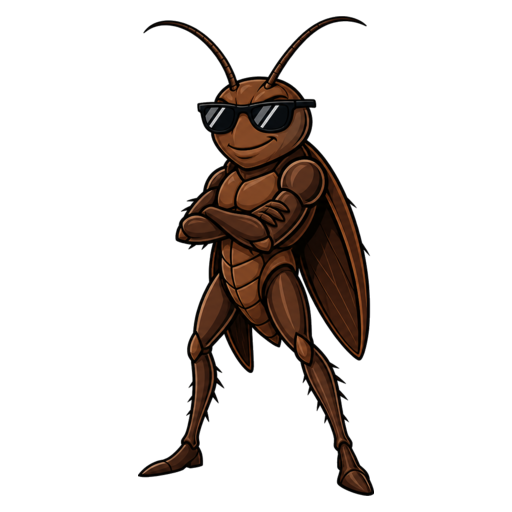
3:00 PM: The hashtag begins trending in Mumbai, Delhi, and Bengaluru. Meme pages start adapting the “cockroach” imagery — cockroaches in graduation caps, cockroaches holding résumés, cockroaches waiting outside job interview rooms.
7:15 PM: Comedian and Twitter personality Tanmay Bhat posts a meme of a cockroach in a suit that reads “5 years of experience for an entry-level job.” It goes on to get 200,000 likes.
11:00 PM: Abhijeet Dipke, a 30-year-old Indian student at Boston University, posts: “If they call us cockroaches, we form a party. The Cockroach Janata Party. Join me. #MainBhiCockroach.” He attaches a hastily designed logo — a cockroach inside the tricolour wheel. Within 90 minutes the post has 50,000 retweets.
Day 2: The Movement Organises
By 9:00 AM on May 16, the CJP had a dedicated X account, a Telegram group with 40,000 members, and a WhatsApp channel with 85,000 subscribers. No advertising spend. No PR agency. Just organic fury and a perfectly timed joke.
The Telegram group became the movement’s brain. Volunteers from Pune, Hyderabad, Kolkata, and Lucknow began creating translated versions of the manifesto in Hindi, Telugu, Bengali, and Marathi. A design team in Bengaluru produced 47 meme templates by lunchtime that anyone could customise with their state or city.
By evening, university WhatsApp groups across India were sharing CJP materials. The reach multiplied through closed, private networks where organic peer sharing is vastly more persuasive than broadcast media.
Why This One Went Truly Viral — The 5 Viral Mechanics
Not every injustice goes viral. Understanding why #MainBhiCockroach did is instructive.
- Specificity: “Cockroach” is a vivid, memorable, humiliating word. Vague complaints about “youth unemployment” do not trend. A Supreme Court judge calling your generation insects does.
- Pre-existing community: The NEET protests of 2024, the anti-agnipath agitations, and years of campus placement anxiety had already built a latent community of frustrated youth. CJP gave it a home.
- Reclaimed identity: Calling yourself “I am also a cockroach” transforms shame into defiance. This pattern — reclaiming a slur as a badge of pride — is documented in viral movements from #BlackLivesMatter to #MeToo.
- Low barrier to participate: Anyone could post #MainBhiCockroach. No march required. No risk. Just a tweet or a WhatsApp forward.
- Satirical humour: Humour travels faster than outrage. A cockroach in a graduation cap is funnier and shareable in a way that a policy paper about graduate unemployment is not.
The First Week: Numbers That Stunned Political Scientists
By May 22, 2026 — exactly one week after the CJI remark — the CJP had:
- 17 million combined social media followers across X, Instagram, and YouTube
- 350,000+ registered “members” via the cockroachjanataparty.io website
- 2.7 million #MainBhiCockroach posts on X alone
- Coverage in 14 national newspapers, 3 international outlets (BBC Hindi, Al Jazeera English, The Guardian)
- 7 state legislators who made public statements referencing CJP
Political scientists at JNU and Jadavpur University have described the CJP’s first week as “arguably the fastest-growing political mobilisation in Indian social media history” — outpacing even the Anna Hazare anti-corruption movement’s digital metrics from 2011, when internet penetration was a fraction of today’s levels.
Media Coverage and Mainstream Acknowledgement
The English-language press was initially cautious, treating CJP as a novelty. The Hindi and regional press went harder and faster, correctly identifying that this wasn’t a metro bubble trend — it was being discussed in Tier-2 cities, small-town colleges, and engineering campus hostels nationwide.
A turning point came when NDTV ran a primetime panel on May 18 titled “Is CJP a Joke or India’s Real Opposition?” The debate panel included two political analysts, a BJP spokesperson, and Abhijeet Dipke himself — who calmly cited employment data for 45 minutes while the BJP spokesperson repeatedly called the movement “immature.” Social media clips of Dipke’s performance drove another wave of sign-ups.
What #MainBhiCockroach Means for Indian Politics
Satire has always been a political tool in India — from Jaspal Bhatti to AIB. But #MainBhiCockroach represents something newer: satire that is simultaneously a real political party with a real manifesto and real mobilisation infrastructure. It sits uncomfortably in a category that Indian political science has no established framework for.
Whether or not the CJP contests elections, its legacy may be to have demonstrated that in 2026, the cost of starting a political movement has dropped to near-zero — and that the currency of political power is no longer money or cadres, but an authentic, relatable grievance expressed in a voice that a generation immediately recognises as their own.
Learn more: What is the Cockroach Janata Party? | Read the CJP Manifesto 2026 | Join the CJP Movement
Disclaimer: The views and opinions expressed in this article are those of the author and do not necessarily reflect the official position of any political party or organisation. Readers are encouraged to independently verify all claims. Read our full Disclaimer · Terms & Conditions · Privacy Policy
